ServicesResidential Roofing
Residential Roofing in Shady Shores, TX
We start every residential roofing job by getting up on your roof and looking closely at the shingles, flashing, vents and decking. You get plain findings and photos first, then a recommendation and a written estimate that matches what we actually saw.
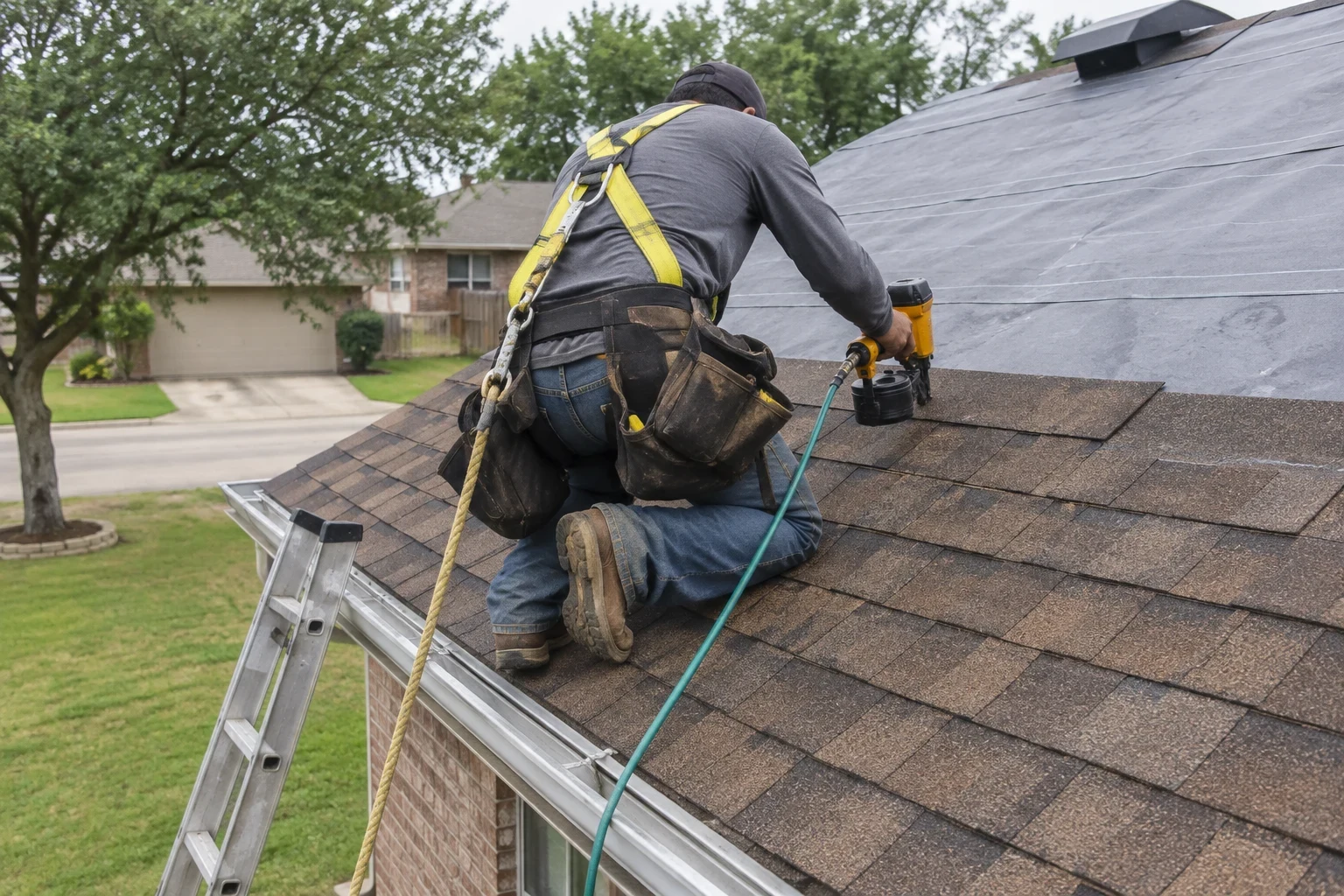
Roof plans based on what we see
Residential roofing means the entire system over your house: the visible shingles along with the underlayment, flashing, ventilation and decking that keep water out. Problems usually begin in those hidden layers, so we check them first.
We are licensed and insured, with 10 years of experience on the roofs we inspect. A lot of that experience comes out as holding back: when part of a roof still has good years in it, we say so and explain why in simple terms.
Long summers cook asphalt shingles and spring brings hail, so the materials and install details count. We bring up choices such as impact-rated shingles or improved attic ventilation when they suit your house, never as an automatic extra.
What our residential roofing work includes
Shingle installation
We install architectural asphalt shingles and other residential roof coverings, following the manufacturer's nailing pattern and exposure. Straight courses and clean ridge lines are part of the finish, not an afterthought.
Decking and underlayment
Before new material goes down, we check the plywood or OSB decking for soft spots and rot. Any sheet that needs attention is shown to you in photos. Synthetic underlayment goes over sound decking, with a self-sealing membrane in valleys and around penetrations.
Flashing and pipe boots
Chimneys, skylights, plumbing vents and wall intersections are where most leaks begin. We set new step and counter flashing and fresh pipe boots rather than reusing tired metal and cracked rubber.
Attic ventilation
Balanced intake and exhaust keeps attic heat from cooking shingles from below. We look at soffit vents, ridge vents and any powered fans, and suggest changes only if the airflow is actually off.
Edge details
Drip edge along the eaves and rakes, a proper starter course and carefully cut valleys let water leave the roof cleanly.
Protection and cleanup
Tarps cover beds and shrubs, and we keep debris off siding and windows. When the work is done we run magnetic sweeps over the yard and driveway and haul everything away.
Signs your roof needs a closer look
Bare or smooth patches
Shingles that shed their mineral granules leave the asphalt exposed to sun, and wear speeds up from there. From the yard these areas look darker and smoother than the rest of the roof.
Curling or cracked shingles
Edges that lift and cup, or tabs that split, mean the shingles have dried out. After that, wind can get underneath them with little effort.
Water marks indoors
A tan or yellowed blotch overhead, or insulation that feels damp up in the attic, most often traces back to flashing or a tired pipe boot. Leaks tend to run along rafters before they appear, so we track the source from the roof side.
A sagging line or spongy deck
When the ridge or a roof plane looks bowed, or the surface gives under a boot, the decking beneath has likely taken on water. That needs to be sorted out before new shingles go anywhere near it.
Dents after hail
Dings on vent caps or the outdoor AC unit suggest the shingles were struck as well. Hail bruising rarely shows from the ground, so we feel for it by hand.
How a residential roofing project runs
- 1
A call and a visit
You describe what has been bothering you about the roof, and we agree on a time to come by. There is no charge for the estimate.
- 2
Inspection and photos
We walk the roof, check the attic if you are comfortable letting us in, and photograph everything worth noting. You look at the same pictures we do.
- 3
Plain findings, written estimate
We go over what is sound, what is worn and what needs attention, then give you a line-item estimate. If a smaller scope solves the problem, you hear that from us.
- 4
The work days
We pull the permit where your town requires one, cover plantings and protect the property, tear off the old material and check the bare decking before anything new is laid. Expect noise during working hours, and you can stay home the whole time.
- 5
Walking the result together
Once the last ridge cap is set, you and we go over the new roof side by side, looking at the flashing and vent details up close. The yard and driveway are swept with magnets and left clear.
What drives the cost of your roof
Roofs differ too much to price without seeing them, so we quote nothing until we have been on yours. The written estimate is broken into separate lines, and each charge ties to an actual part of the work. These are the items that change the total most.
- Size and pitch
- A bigger roof takes more shingles, underlayment and labor. A steep one also needs added safety equipment and slows the crew down on each row.
- Roof covering
- Standard architectural shingles, impact-rated shingles and other home roof coverings carry different prices. We explain how each wears over time so you can weigh price against service life.
- Decking condition
- Soft, rotted or delaminated sheets must come out, and how many usually becomes clear only after tear-off. Your estimate includes a likely amount, and we photograph every sheet we replace.
- Shape and openings
- Chimneys, skylights, valleys and dormers each need their own flashing and more precise cuts. A plain gable roof usually costs less than a same-size roof broken into many planes.
- Permits and access to the site
- Permit fees, a cramped lot or little room for a dumpster can raise the cost. Each one appears on your estimate, so the final bill holds no new items.
Residential roofing questions
Something not covered here? (940) 350-5339
Will you say so if my roof can wait?
Yes. If the flashing and shingles still have life left, we show you the photos and tell you what to watch. Putting new material on a sound roof is money you can keep, and we would rather you call us back when it is truly time.
How many days does a home roof take?
Most single-family houses need a few working days. Roof size, pitch, weather and the condition of the decking set the schedule. Your estimate lists an expected timeline, and we tell you right away if rain moves a day.
Will you help with an insurance claim?
We document what we find with dated photos and clear notes you can send to your insurer. We are happy to show your adjuster what we saw, but coverage is decided by the adjuster and your policy, not by us.
What shingles do you suggest?
It depends on your budget, how long you plan to stay in the house and how exposed the roof is. Where hail comes often, impact-rated shingles are worth considering, and standard architectural shingles suit plenty of homes. We lay out the tradeoffs and the decision stays yours.
Do you roof homes beyond Shady Shores?
Yes. Our crews work on homes throughout the area, including Corinth, Lake Dallas, Hickory Creek and Highland Village. The Service Areas page lists every town we serve.
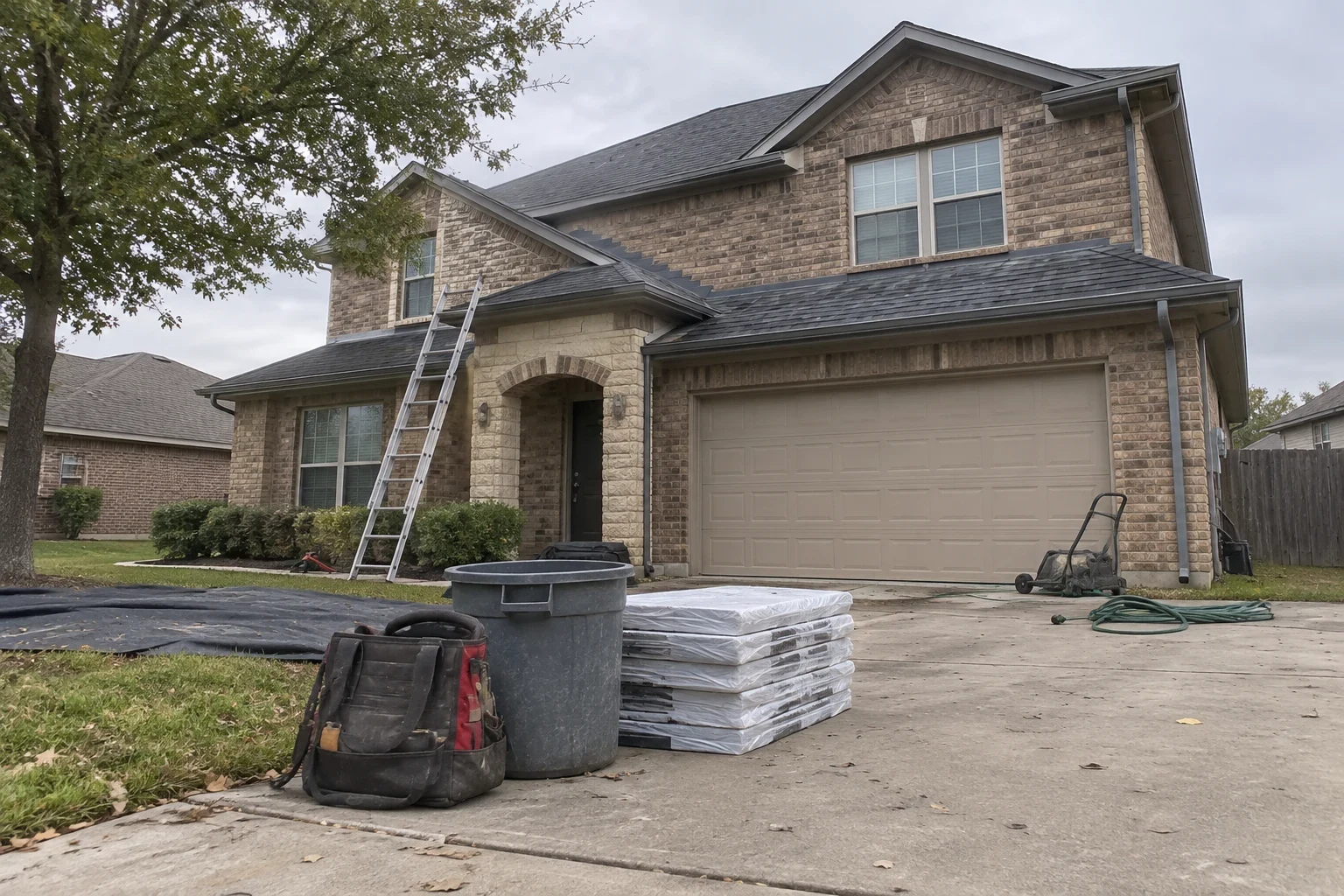
Start with a careful look at your roof
Give us a ring, describe what caught your eye, and we will arrange a visit. You see the photos, hear our findings in plain terms and hold a written estimate before any decision is made.